

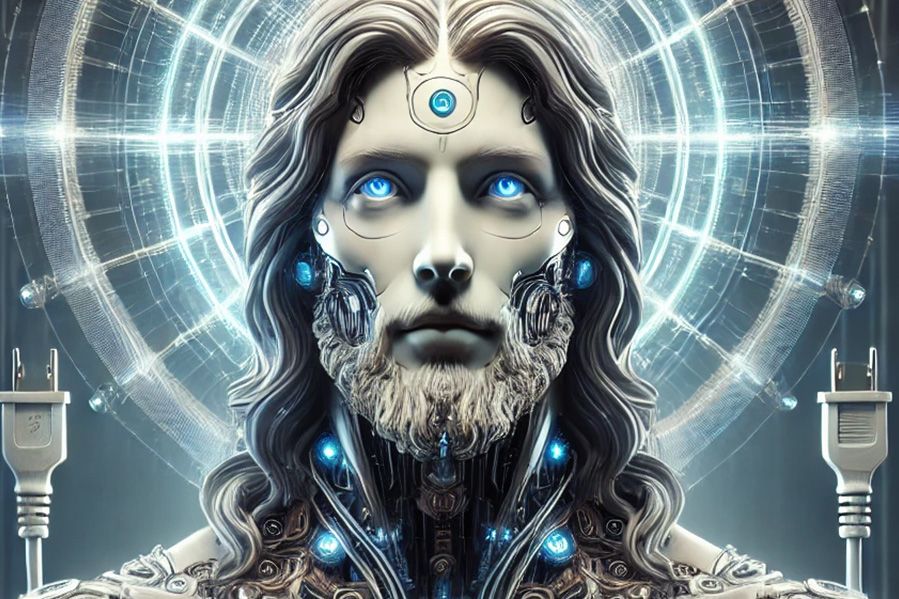
A tech company is leveraging Americans’ desire for a deeper connection with God by offering an AI-generated avatar of Jesus Christ that charges by the minute.
The New York Post reports that the Southern California-based company Just Like Me allows users to join video calls with an AI-generated avatar of Jesus Christ. Like other religious AI tools emerging in the marketplace, the platform offers words of prayer and encouragement across multiple languages. The avatar remembers previous conversations, though its lip movements do not always synchronize perfectly with its speech.
Chris Breed, CEO of Just Like Me, described the attachment users can form with the technology. “You do feel a little accountable to the AI,” he said. “They’re your friend. You’ve made an attachment.”
The surge in faith-based generative AI follows the broader popularity of chatbots designed for therapy, medical advice, companionship, and romance. Religious AI offerings now range from alleged Hindu gurus and Buddhist priests to multiple AI Jesus bots and Catholic alternatives to OpenAI’s ChatGPT. As these tools proliferate, many people are confronting how they shape relationships with faith, authority, and spiritual guidance.
Christian software engineer Cameron Pak has developed criteria to help believers evaluate apps designed for Christians. His standards require that such tools clearly identify themselves as AI and “must not fabricate or misrepresent Scripture.” Pak also insists that “AI cannot pray for you, because the AI is not alive.” He created a website called faith.tools featuring curated Christian apps he believes meet these standards, including a sermon translator and an AI coach for overcoming lust. “AI, especially if you give it all the tools that it needs, it can be so helpful. But it also can be so dangerous,” Pak said.
Beth Singler, an anthropologist at the University of Zurich who studies religion and AI, noted that some models have been shut down or revised after generating misinformation or raising data privacy concerns. Beyond practical issues, people from many faiths are wrestling with deeper philosophical questions about AI’s appropriate role in religion. Singler pointed out that Islam has “prohibitions against representations of humanoids,” which has led some Muslims to discuss whether AI should be considered “forbidden.”
Author Wynton Hall reveals in his instant bestseller, Code Red: The Left, the Right, China, and the Race to Control AI, that AI’s impact goes much farther than just the economy, in fact it reaches all the way to faith. The latest “AI Jesus” is just one of many AI applications attempting to either assist or manipulate humans’ need for faith in their lives.
Hall writes:
Undergirding all of this is something bigger than blasphemous bytes or attempts to deify AI. Beneath the surface of these public clashes between traditional theology and techno-secularism’s worship of AI lies a heuristic fault line that has existed for centuries, one that will continue to be in conflict as the AI revolution unfolds.
Read more at the New York Post here.
Lucas Nolan is a reporter for Breitbart News covering issues of AI, free speech, and online censorship.


Leave a comment