

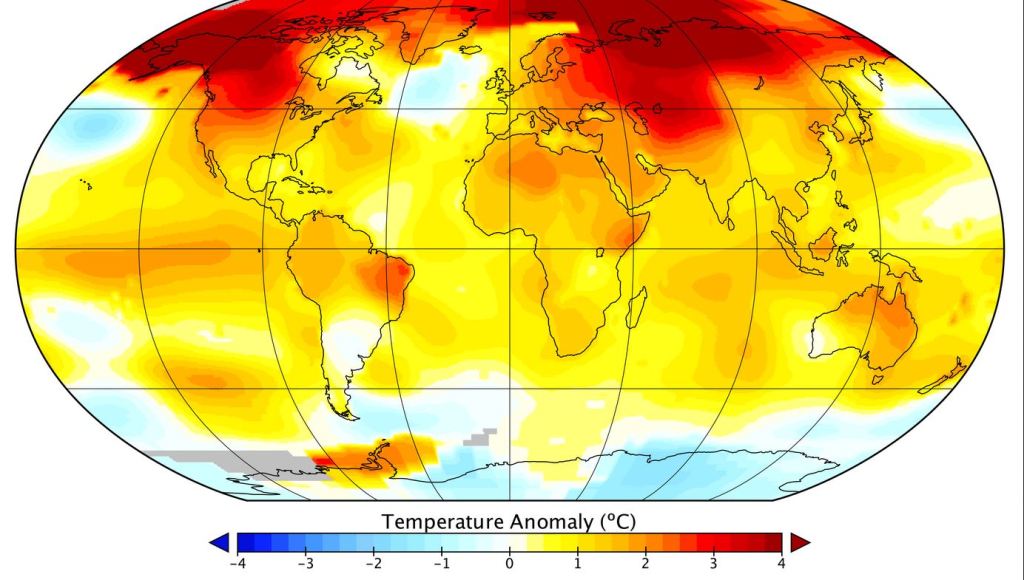
The ever-shifting, interconnected system of global air and ocean currents dictates the weather we experience daily.
This year, however, scientists are warning that a particularly potent version of one of Earth’s most infamous climate phenomena, El Niño, could dramatically alter these patterns.
Climate scientist Daniel Swain recently posted on X (formerly Twitter), stating: “Whew. All signs are increasingly pointing to a significant, if not strong to very strong, El Niño event.”
This sentiment was echoed by Washington Post meteorologist Ben Noll, who cautioned that “changes in location, intensity and frequency of droughts, floods, heat waves and hurricanes are all likely.”
In his X post, Noll estimated a 22 percent chance of a “super El Niño” by August and an 80 percent chance of a “strong” one based on new modeling from the European Center for Medium-Range Weather Forecasts.
This outcome is not set in stone, and predictions in early spring tend to be less reliable than predictions later in the year. Some scientists have warned against making assumptions just yet.
But if it does happen, the impact on U.S. weather would be profound.
What is El Niño?
For hundreds of years, fishermen off the western coast of South America had their livelihoods rocked by a periodic change in water temperature that caused mass death in the food chain they relied on.
Since it always happened around December, they dubbed it “El Niño de Navidad” — literally ‘the little boy of Christmas’ — in a sardonic reference to the birth of Jesus Christ.


 END TIMES PROPHECY WATCH
Leave a comment