

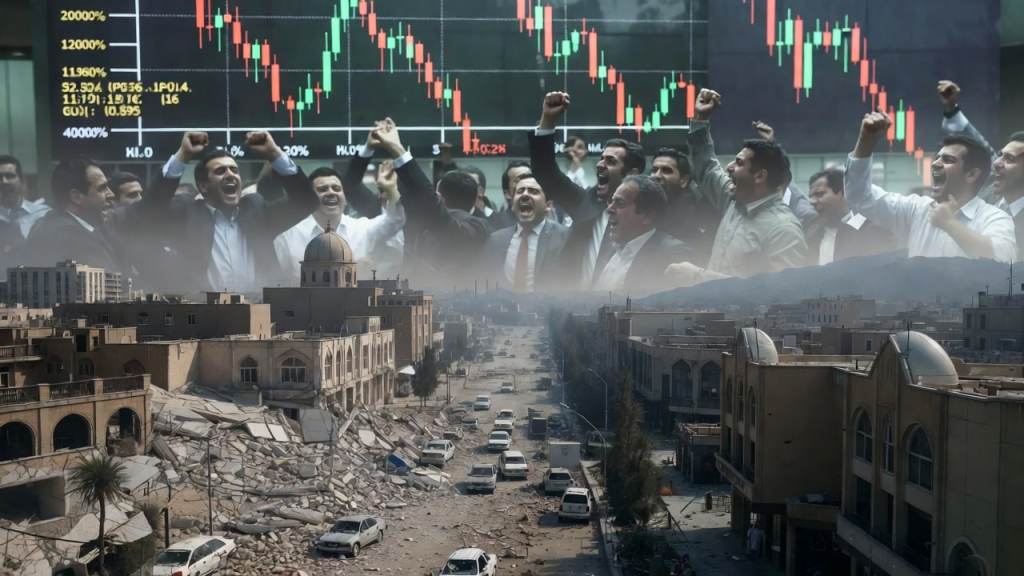
We have never seen anything quite like this before. There have been wars in the Persian Gulf – at least two of them in living memory. There have been oil price shocks – most famously in the 1970s and 1980s.
There have been cost of living crises triggered by war – as we all know, having faced the aftershocks of Russia’s invasion of Ukraine. But this latest war is holding a knife against the very throat of the economy.
The Strait of Hormuz is the most consequential stretch of water anywhere in the world. Think of the global economy as a giant organism: like all big animals, it needs to be constantly fed.
We stick raw materials – from metals and fuels to minerals and foods – in one end. Out of the other come all that we take for granted, from computers and phones to the power, heat and chemicals that keep us all alive.
And few of those ‘inputs’ are more important than oil and gas. Many people assume that, in 2026, we have eliminated, or at least are close to eliminating, our dependence on these messy, polluting substances. They are wrong.
Like it or not, the world still needs oceans of oil, not merely to fuel cars, planes and ships, but also to make pharmaceuticals, plastics and a million other goods.
We need gas not just to heat our homes, but to help produce the nitrogen-based fertilisers that grow our foods. No fertilisers, which is to say fossil fuels – and half the world’s population – would be dead.
And here’s the reason this moment is so dangerous. Nowhere has such a concentrated supply of oil and gas as the Persian Gulf.
Yes, there is a wealth of gas in Russia. There is oil aplenty in the layers of shale rock beneath Texas. But even today, after a century or more of intensive drilling, nowhere else can remotely compete with the bountiful oil and gas under the ground in the Gulf.


 END TIMES PROPHECY WATCH
Leave a comment