

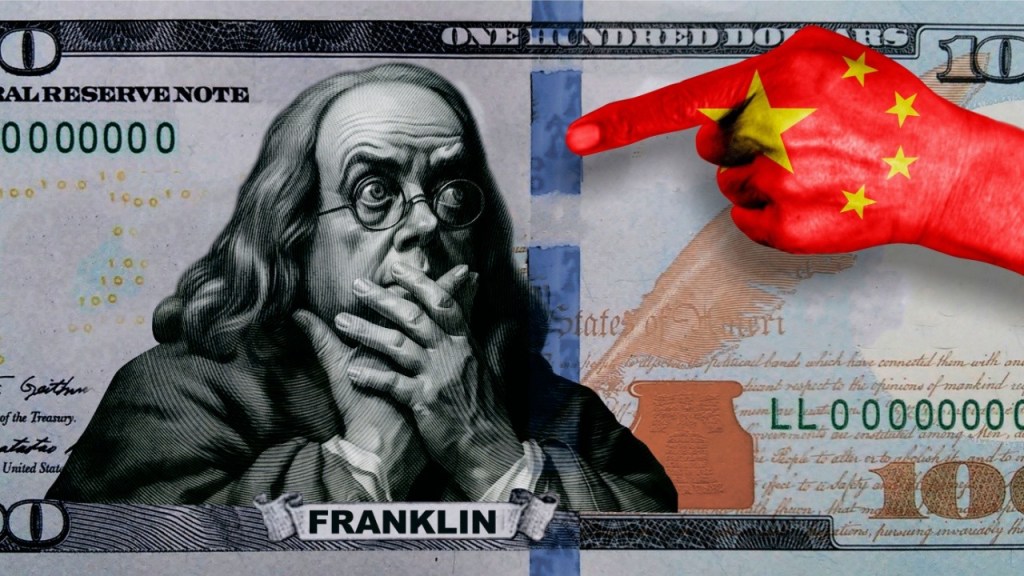
For decades, Americans have assumed the dollar is untouchable. It has been the backbone of global trade, the symbol of U.S. economic power, and the silent reason why our standard of living has been so high. Most of us take it for granted. But the world is changing — quietly, steadily, and with a subtle warning from China that few Americans are noticing.
In recent weeks, Chinese regulators verbally advised major Chinese banks to limit their exposure to U.S. Treasuries. This is not an official Bank of China directive — the central bank’s holdings remain untouched. It’s guidance for the financial institutions under its watch, a nudge toward diversification and risk management. China is not selling everything overnight, but make no mistake: this is a signal the rest of the world will notice.
Why U.S. Treasuries Are More Than Just Debt
U.S. Treasuries are often described as “safe,” but their importance goes far beyond that. They are the currency of trust in global finance. Foreign governments, pension funds, and global investors hold trillions in U.S. debt because it’s liquid, reliable, and fungible — meaning it can be used almost anywhere in the world.
For the United States, this has been a superpower advantage. By being the world’s preferred borrower, the U.S. government has been able to pile on debt at historically low interest rates. The dollar has remained the dominant reserve currency, and Americans have benefited from cheap borrowing, a high standard of living, and financial security that most of the world can only envy.
Now, that trust is subtly being tested. When a major player like China begins shifting its strategy, even incrementally, it starts to raise questions: if China is cautious, who else might be rethinking their exposure to U.S. debt?
The Stakes for Everyday Americans
You don’t need a finance degree to see the stakes. Rising Treasury yields, a weakening dollar, and higher borrowing costs would affect everyone:
Mortgages and car loans could become more expensive.
Inflation could chip away at the value of your paycheck.
Retirement accounts, 401(k)s, and savings could grow more slowly.
Even without a headline-grabbing financial crisis, the gradual erosion of confidence can quietly destabilize daily life. The ripple effects may be slow at first, but they can be profound over time.
Elon Musk’s Dire Warning
Elon Musk has been blunt: without a revolution in productivity powered by AI and robotics, the U.S. could face economic collapse. Musk is not exaggerating — he’s highlighting a reality most Americans ignore. Our debt, now surpassing $38 trillion, is growing faster than our ability to generate the economic output needed to support it.
AI and robotics may indeed offer a lifeline, producing wealth, efficiency, and growth at a scale never seen before. But in the meantime, global investors are already adjusting their bets. If other nations follow China’s lead, the U.S. could find itself paying more to borrow and losing influence in the process.
A Long-Term, Strategic Move
It’s important to understand what China is doing — and what it isn’t. This is not a fire sale of U.S. debt. The Chinese government isn’t trying to crash the dollar overnight. What they are doing is preparing for a changing world.
By instructing banks to manage exposure, China is signaling a long-term strategic pivot:
Diversifying reserves into other assets, such as gold or alternative currencies.
Reducing the risk of being caught in sudden U.S. interest rate swings.
Preparing for geopolitical tension, including potential conflict over Taiwan or future friction with the U.S.
Other countries are watching. Japan, the UK, and others could follow similar strategies. If multiple major holders of U.S. debt reduce their exposure simultaneously, the results could be dramatic: rising interest rates, a weaker dollar, and a more expensive borrowing environment for businesses and individuals alike.
Broader Economic Picture
This is about more than China and Treasuries. The U.S. is facing a structural debt problem. Every year, the government borrows more to cover spending, and interest payments alone are consuming a larger portion of the budget. If foreign demand for debt slows, the U.S. must either raise rates to attract buyers or increase domestic borrowing. Both have consequences:
Higher interest rates could slow economic growth and depress the stock market.
The dollar could lose some of its global reserve status, making imports more expensive and eroding American purchasing power.
Ordinary Americans could feel the effects in higher costs for everything from homes to groceries.
This isn’t a distant possibility. It’s a real economic dynamic unfolding right now, quietly, and China is the first country signaling a shift.
What Comes Next
The message is clear: the world is slowly moving toward a more diversified, multipolar financial system. The dollar’s reign is not guaranteed forever. Americans need to wake up to a new reality: our economy is deeply connected to global trust, and that trust is not unconditional.
The good news? Innovation, technological growth, and careful fiscal planning could still keep the U.S. strong. But ignoring these signals could leave the country vulnerable to slower growth, higher costs, and financial instability.
China isn’t attacking. They’re planning. And the U.S. would be wise to do the same.


 END TIMES PROPHECY WATCH
Leave a comment