

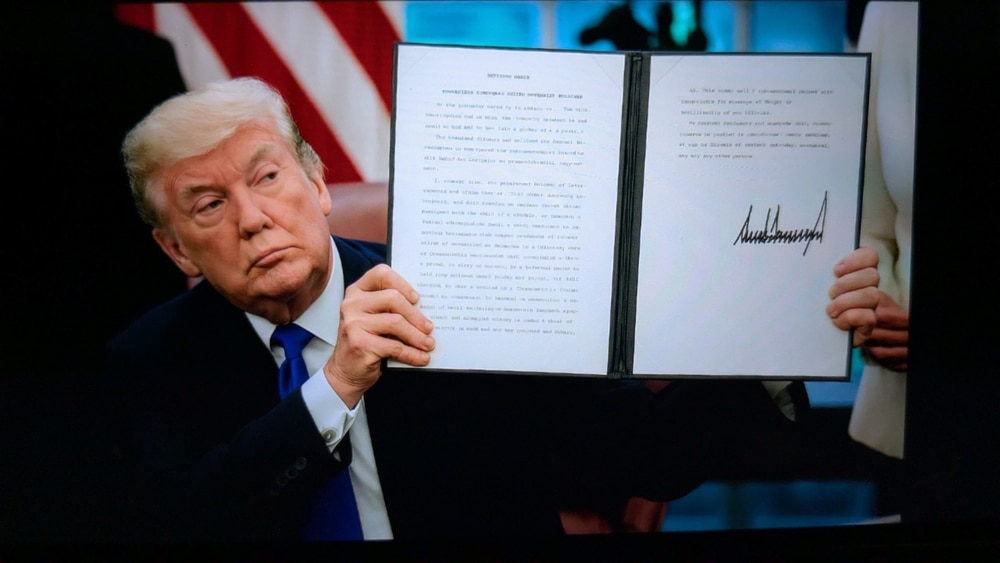
In a significant move that has sparked both hope and concern across the globe, President Donald Trump has signed an executive order to lift sanctions on Syria.
This decision, which comes amidst ongoing geopolitical tensions, aims to reshape the United States’ approach to the war-torn nation and potentially open new avenues for humanitarian aid and reconstruction efforts.
As reported by ABC News, the executive order was signed with the intention of easing the economic burden on Syrian civilians who have endured years of conflict and hardship. It’s a decision that feels like a double-edged sword—on one hand, it could mean relief for millions; on the other, it raises questions about the implications for regional stability.
The sanctions, initially imposed to pressure the Syrian government, have long been criticized for their devastating impact on ordinary citizens. Many have argued that these measures, while targeting the regime, have disproportionately harmed the vulnerable, limiting access to basic necessities like food and medicine.
I can’t help but feel a pang of empathy when thinking about the families who’ve suffered under these restrictions. Could this be a turning point for them? Or are we stepping into uncharted territory with unforeseen consequences? The debate is already heating up among policymakers and analysts.
“In lifting these sanctions, we are taking a bold step toward supporting the Syrian people while maintaining our commitment to countering terrorism and promoting stability,” Trump stated during the signing ceremony.
This statement resonates with a sense of cautious optimism, yet it’s hard not to wonder about the broader geopolitical ripple effects. Critics are quick to point out that easing sanctions might inadvertently strengthen the Syrian regime or embolden other actors in the region. It’s a gamble, and the stakes couldn’t be higher.
According to the original coverage, the administration believes this move could encourage dialogue and pave the way for international cooperation in rebuilding Syria. The hope is that by reducing economic pressures, the U.S. can foster an environment where peace talks gain traction, though skepticism remains among many observers.
On a personal note, it’s heartbreaking to think of the Syrian people caught in the crossfire of politics and power struggles for so long. If this executive order brings even a sliver of relief, it might be worth the risk—but only time will tell if this decision will lead to genuine progress or further complications.
The international community is watching closely, with allies and adversaries alike weighing in on what this means for the future of U.S. foreign policy in the Middle East. Some see it as a pragmatic step, while others fear it could undermine years of diplomatic efforts to hold the Syrian government accountable.
As discussions unfold, one thing is clear: the plight of the Syrian people must remain at the forefront of any decision. Their resilience in the face of unimaginable challenges is a reminder of why policies like these matter so much. Let’s hope this move signals the beginning of a brighter chapter for them, even if the road ahead remains uncertain.


 END TIMES PROPHECY WATCH
Leave a comment