

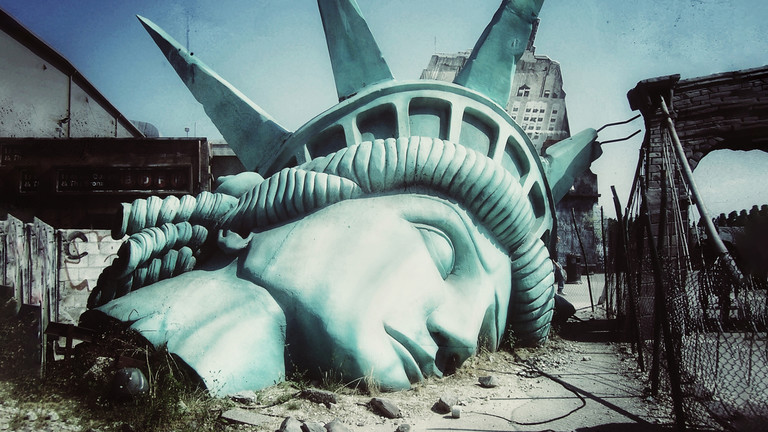
The main events of international politics in 2023 have shown that the origin of the current fundamental changes is natural, and the main processes are constructive. That is why the past year will be considered by future historians as the end of the period in which the new reality was perceived with trepidation, and the beginning of a time when a constructive attitude was developed towards it. In other words, it was in 2023 that many of us finally realized that the collapse of the previous international order is not a catastrophe, but instead brings significant benefits for the development of the whole world.
Because the very nature of international politics is formed on tragedies, these policies will always be accompanied by the upheavals and horrors of war. But somewhat obscured by all the dramas we are witnessing now, the features of the equilibrium that will form the basis of a relatively peaceful and just order in the future are gradually emerging.
All the more so because some of the characteristics of this new reality have already become visible.
It is particularly positive that the behavior of the powers acting as its bearers is neither destructive of the foundations of inter-state relations nor aimed at fomenting large-scale military confrontation. Among these features of the new international order, some of the most important can be identified.
First, the emergence of democratic multipolarity, symbolized by the BRICS bloc.
Second, the gradual erosion of the monopoly of a small group of states in various sectors of the global economy.
Third, the revival of foreign policy activity by a greater number of countries, which we define as the world majority: a group of states that do not set themselves revolutionary tasks, but seek to strengthen their independence in world affairs and determine their own future.
All these vivid phenomena of world politics in 2023 show that political change – to use a definition from the British historian Edward H. Carr’s book ‘The Twenty Years’ Crisis: 1919-1939’ – is much more likely than revolutionary change, which has always led humanity to world wars. And now we see that even the most conservative forces in international affairs, united in military-political blocs led by the United States, are either moving toward a revision of the order under which they had a privileged position, or are fighting defensive battles whose purpose is to create the conditions for future negotiations. In the case of the forces of progress, led by the BRICS group, the struggle for change is also characterized by hopes for revision of the international order, but not its decisive destruction. This allows the observer to be cautiously optimistic about our common future.
The BRICS group emerged at a time when the dominance of the US and its closest European allies in world affairs was almost complete, when they could act as the main distributors of global benefits and, most importantly, when this situation was to some extent acceptable to other states.
This is another phenomenon of the international order to which we are now saying goodbye, and of the way in which it is happening. Never before has the injustice shown to the interests of the majority of the world’s countries been so effectively offset by the benefits that have accrued to virtually everyone from globalization. One might even say that the state of affairs known to us as the liberal world order was, in its nature and content, a transitional phase between the absolute tyranny of the European empires of the 19th century and the new international order that is only now emerging. And it is coming to pass precisely as a response to the inevitable process of the emergence of a multitude of sovereign states.
The countries that formed BRICS in 2006 originally set out to increase their influence in world affairs and to shape global development in their own interests. They did not aim to destroy the US-led world order, and have not yet come up with such an ambitious program. The main feature of this association – the sovereign equality of its participants – initially distinguished it from the existing formal and informal coalitions of the West, which are centered on the unquestioned power of the US over the main actions of its allies in the sphere of foreign policy and security. Due to its composition, the BRICS group won’t be able to establish such a type of relations among its participants.


 END TIMES PROPHECY WATCH
Leave a comment