

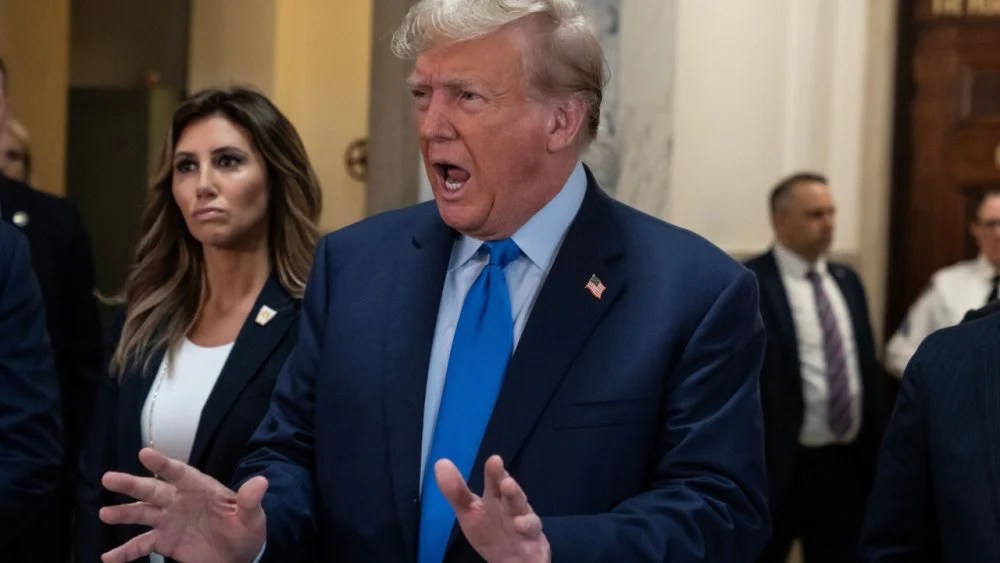
Donald Trump’s possible return to the presidency could bring a sense of unpredictability and volatility to the Middle East.
As the U.S. presidential elections loom later this year, current polls point to the possibility of another term for Donald Trump. Given the tumultuous impact of Trump’s previous presidency, this prospect raises significant concerns for the Middle East. His signature approach, characterized by unorthodox personal diplomacy and off-the-cuff statements, has contributed to regional instability. Despite the changes in the region during his absence, Trump’s possible return poses unique challenges. The “Trump Effect” on diplomatic relations is further complicated by the escalating U.S.-China rivalry. Trump’s direct and provocative tone could force Middle Eastern states to choose sides and potentially exacerbate conflicts. Fortunately, regional actors are more accustomed to Trump’s unique style and have better diplomatic relations. Nevertheless, Trump’s return could have significant repercussions for the Middle East, as the United States is still the most powerful actor in the region.
In certain respects, Trump’s approach to the Middle East was not much different from Obama’s or Biden’s. The U.S. military presence in the region, counter-terrorism policies, and support for regional allies are issues on which all three presidents have pursued similar policies. Where Trump differed was on Iran, on which he sought economic and diplomatic containment, unlike Obama and Biden, who tried to reach a diplomatic agreement with Tehran regarding its nuclear program. However, even with this exception, all three presidents aimed, at least notionally, to reduce the U.S. imprint in the region.
Nevertheless, Trump’s handling of the region’s problems problems was radically different. Most issues in the Middle East require skillful statecraft that maintains a delicate balance of interests with no clear, definitive solutions. Trump was a bull in a china shop. He conducted personal diplomacy, the content of which was unknown to American diplomats and sometimes even to his own inner circle. He made conflicting promises to different leaders. He made erratic statements and took unexpected and radical steps. And with his indifference to issues not directly related to U.S. economic interests, he gave the impression that U.S. leadership in the region was in free fall. In this way, Trump fanned the flames of the Qatar crisis in 2017, Turkey’s aggressive foreign policy, the Turkish-UAE rivalry, the Saudi-Iranian rivalry, and the Israeli-Palestinian crisis.


 END TIMES PROPHECY WATCH
Leave a comment